
Is Sushi Gluten Free?

Quick Answer
Is Sushi Gluten Free?
The soy sauce on the table is a bigger risk than the fish - plus imitation crab and tempura are two hidden sources worth knowing before ordering.
Feeding a family with one celiac member usually means the fish itself is never the worry at a sushi restaurant - the soy sauce bottle sitting on the table is. Is sushi gluten free? It depends heavily on preparation: raw fish and rice are naturally clean, but soy sauce, imitation crab, and tempura batter are three common ways gluten gets onto the plate.
Gluten Risk at a Glance
- Verdict: It varies (medium confidence)
- Natural gluten risk: 5/10
- Cross-contact risk: 8/10
- Label reliability: 4/10
- Celiac disease safe: conditional
- Gluten sensitivity (NCGS) safe: conditional
- Primary concern: cross-contact and soy sauce
- Gluveto Safety Score: 3.6/10
Does Sushi Contain Gluten?
Sushi rice and raw fish carry a moderate natural gluten risk score of 5 out of 10 as a category, not because rice or fish contain gluten, but because "sushi" as a menu item almost always comes bundled with soy sauce, and often with imitation crab or tempura, both of which can be real gluten sources. So is sushi gluten free by default? Not as ordered at most restaurants - the risk comes from what surrounds the fish and rice, not the fish and rice themselves.
How Sushi Picks Up Gluten Along the Way
Cross-contact risk is high, at 8 out of 10, and it's one of the higher-risk categories tracked on this site, coming from:
- Shared preparation surfaces
- Soy sauce containing wheat
- Tempura or fried items prepared in the same kitchen
Label reliability is low, at 4 out of 10, since a sushi menu almost never spells out sauce ingredients or prep methods on its own.
How Risky Is Sushi for Celiacs?
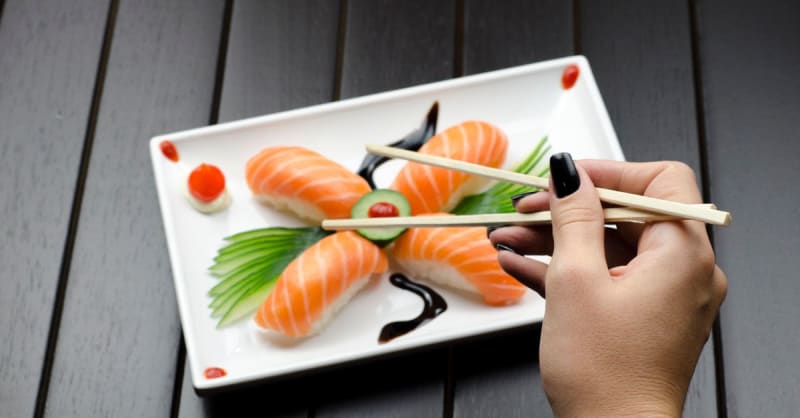
Sushi's celiac-safe status is conditional, and this is a case where the condition is genuinely worth spelling out plainly: sashimi (raw fish with no rice or wrapping) prepared on a clean surface, with tamari or a certified gluten-free soy sauce on the side instead of standard soy sauce, is a safe order with real confidence. What makes a roll or a full sushi meal unsafe by default is that a shared cutting board, a shared fryer for tempura, and standard soy sauce (which is traditionally brewed with wheat) are all default features of a typical sushi kitchen unless a restaurant is specifically asked to avoid them. A reader ordering "sushi" without any of those questions asked is ordering a genuinely unpredictable dish, not a mostly-safe one with minor risk.
The Version That Matters
| Variant | Risk Level | Why |
|---|---|---|
| Sashimi (no rice, no wrap) | Lower risk | Just raw fish - fewest added ingredients |
| Nigiri (fish over rice) | Moderate risk | Rice vinegar and soy sauce still in play |
| Rolls with imitation crab | Higher risk | Imitation crab often contains wheat as a binder |
| Tempura rolls | Higher risk | Tempura batter is a direct wheat-flour source |
| Japan-style with tamari | Lower risk | Tamari is traditionally brewed without wheat |
| Western-style with soy sauce | Higher risk | Standard soy sauce usually contains wheat |
Country of preparation matters more with sushi than with most foods on this site: sushi made in Japan more often defaults to tamari, while Western sushi restaurants more often default to standard soy sauce and imitation crab, both real gluten risks.
How to Buy and Use It Safely
Bring or request tamari or a certified gluten-free soy sauce rather than trusting the bottle already on the table, since that bottle is standard soy sauce by default in most Western restaurants. Sashimi and rolls built with real crab, avocado, and vegetables, without tempura, are the safest order category. Grocery store sushi sections are worth extra caution, since pre-made rolls often use imitation crab as a cost-saving ingredient.
Mistakes People Make with Sushi
- Using the soy sauce already on the table. It's standard soy sauce by default; ask for tamari or bring a personal bottle instead.
- Assuming "crab" means real crab. Many rolls use imitation crab, which is often wheat-bound - ask specifically.
- Ordering tempura rolls without asking. Tempura batter is a direct wheat source, not a cross-contact maybe.
- Not asking about the cutting board. Sashimi is only as safe as the surface it's cut on - ask if a dedicated board or fresh surface is used.
Free Download
57 Hidden Gluten Ingredients to Avoid
The printable cheat sheet for scanning any label with confidence.
No spam. Unsubscribe anytime.
Bottom Line - Is Sushi Gluten Free?
Sashimi and simple nigiri, ordered with tamari instead of standard soy sauce, are a genuinely safe combination - the fish and rice were never the problem. Is sushi gluten free enough to order without any questions? No - imitation crab, tempura batter, and the table soy sauce bottle are the three things actually worth asking about before ordering.
Editorial Process
This article was written and reviewed by the Gluveto Editorial Team for factual accuracy, gluten-free safety, and alignment with current FDA labeling guidance.
We reference trusted organisations including the Celiac Disease Foundation and the FDA when evaluating foods and ingredients.